You find the name Xuzhanikanoz3.2.5.0 online, and it looks like a software release. The numbers seem familiar, but the name tells you very little. Is it an application, a technical file, an update, or simply a label that websites have started discussing?
The most reliable answer is that Xuzhanikanoz3.2.5.0 has not been clearly identified as a specific, publicly documented software product. Online descriptions connect it with different technologies, yet an official developer, confirmed feature list, and authenticated download source remain difficult to establish.
That doesn’t automatically make the name suspicious. Software developers use unusual names for all kinds of projects. However, there is an important difference between recognizing a possible version number and knowing that a real application exists.
Here is what the available information tells us, which claims deserve caution, and how to investigate the name if you encounter it on your device.
What Is Xuzhanikanoz3.2.5.0?
Xuzhanikanoz3.2.5.0 is an unfamiliar technology-related name containing a sequence that resembles a software version number. Its exact purpose, developer, and product identity have not been independently confirmed.
The name could represent a project label, a component, a versioned file, or an application identifier. These are possible explanations, not verified descriptions of an existing product.
One reason the term is confusing is that its two parts suggest different things.
“Xuzhanikanoz” resembles a custom product or project name, while “3.2.5.0” looks like a release identifier. Together, they create the impression of a developed software product.
But appearances are not documentation.
A legitimate software release normally has some information connecting its name to the people or organization responsible for it. That connection might appear in developer documentation, an official repository, release notes, or a software distribution platform.
For Xuzhanikanoz3.2.5.0, those important connections have not been established through reliable public sources.
Xuzhanikanoz3.2.5.0 at a Glance
| Question | Available information |
| What is it? | An unidentified technology-related term |
| Does it resemble a software version? | Yes |
| Who developed it? | Not verified |
| What does it do? | No confirmed function |
| Is it available for Windows? | Unknown |
| Is there an Android application? | Not confirmed |
| Does it have an official website? | No authenticated product website established |
| Can users download it safely? | No verified official installer identified |
| Is it malware? | No evidence sufficient to make that classification |
The missing details matter most when someone is considering downloading or trusting a file carrying this name.
What Does the Number 3.2.5.0 Actually Mean?
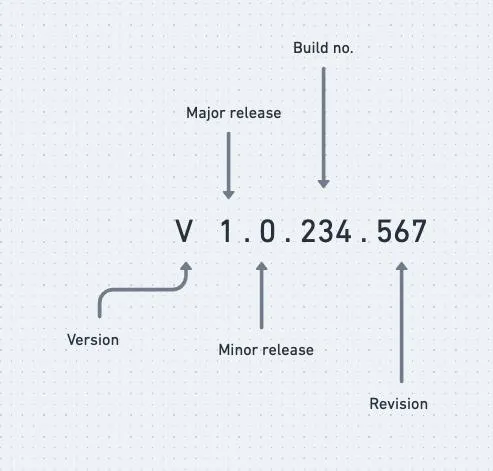
The most recognizable part of Xuzhanikanoz3.2.5.0 is its numerical ending.
Software developers use version numbers to keep track of releases, distinguish changes, and identify builds during development.
One established format contains four numbers separated by periods.
Microsoft’s documentation on software versioning explains a convention built around major, minor, build, and revision components.
Under that convention, 3.2.5.0 could be read like this:
| Number | Component | General purpose |
| 3 | Major | Identifies a major version |
| 2 | Minor | Identifies a secondary version |
| 5 | Build | Identifies a particular build |
| 0 | Revision | Identifies a revision |
This table explains a recognized technical format. It does not prove that Xuzhanikanoz uses Microsoft’s numbering convention.
Developers can choose different systems, and numbers do not always follow the same rules.
Is It Related to Semantic Versioning?
Another familiar approach is Semantic Versioning, often shortened to SemVer.
Semantic Versioning normally uses three main numbers:
MAJOR.MINOR.PATCH
These numbers help communicate how a version changes a software project’s public interface.
The four-part sequence 3.2.5.0 does not follow that standard three-number form directly.
The difference is worth understanding because people sometimes assume that every number separated by periods must carry a fixed meaning.
In reality, the developer’s own documentation is needed to explain an unfamiliar versioning scheme.
Does Version 3.2.5.0 Mean Earlier Versions Existed?
Not necessarily.
A name ending in 3.2.5.0 might suggest a product that has gone through several releases. However, a numerical label alone cannot establish a development history.
There is no confirmed public sequence of Xuzhanikanoz releases showing how the software changed over time.
It would therefore be misleading to claim that this version fixed known bugs, improved performance, or introduced features without examining genuine release notes.
Why Are There Different Explanations Online?
One of the most confusing aspects of Xuzhanikanoz3.2.5.0 is that websites do not consistently describe the same product.
Some discussions connect the name with device maintenance. Others introduce productivity-related functions, while certain explanations focus on the possibility of a technical identifier.
These interpretations are different enough that they should not be combined into one imaginary application.
Claims About Device Performance
Some descriptions associate the name with phone or computer maintenance.
They mention familiar activities such as managing storage, monitoring resources, and improving device performance.
Those features are common in existing system utilities, which may make the descriptions sound believable.
However, no authenticated Xuzhanikanoz product documentation establishes these capabilities.
There is also no dependable evidence demonstrating that software under this name improves battery life, removes unnecessary files, or increases processing speed.
Readers should treat those claims as unconfirmed rather than proven product features.
Claims About Productivity Tools
Other explanations describe an entirely different kind of software.
They associate the term with task organization, work management, and digital productivity.
Such applications normally provide recognizable functions, documented interfaces, and some indication of who maintains the product.
Without that evidence, assigning productivity features to Xuzhanikanoz3.2.5.0 would be speculation.
Could It Be an Internal Project Name?
This is another reasonable possibility.
During development, software components sometimes receive internal labels that are never intended to become public product names.
A versioned identifier can appear in diagnostic information, development records, or filenames without belonging to a commercial application.
This possibility explains why the name has a technical appearance, but it does not establish its origin.
The broader lesson applies to other unfamiliar online terms, too. Our article on Zvodeps and its different online interpretations explores another case where a name receives conflicting explanations without a clearly established product behind it.
Where Might You Encounter Xuzhanikanoz3.2.5.0?
The context in which a name appears is often more informative than the name itself.
Consider three different situations.
A Search Result or Technology Article
Suppose you discover Xuzhanikanoz3.2.5.0 while browsing a technology website.
The page may present a polished feature list or discuss the benefits of a supposed application.
Before accepting that description, look for a developer reference.
Does the article identify an original source? Is there documentation explaining the product? Can the claimed functionality be traced to an accountable publisher?
If the answer is unclear, the article may be offering an interpretation rather than reporting verified specifications.
A File on Your Computer
An unfamiliar filename deserves attention, particularly if the file came from an unknown source.
Start by checking its location, extension, and origin without executing it.
For example, a name ending in .txt suggests a text document, while an .exe is associated with executable software on Windows.
These extensions describe file types, not whether the file is genuine or safe.
A filename can be changed, so even an apparently familiar application name is not enough to establish authenticity.
A Message Asking You to Update Software
An update message can create more pressure because it may appear to require immediate action.
Imagine receiving a notice stating that Xuzhanikanoz3.2.5.0 must be installed to continue using a service.
If you do not recognize the program, first establish which existing application supposedly needs the update.
Check the application’s normal update section or its publisher’s official support website independently.
An unexpected notification should not be treated as proof that a genuine update exists.
Is There an Official Xuzhanikanoz3.2.5.0 Download?
A verified official download source has not been established through the available research.
That means it is not possible to recommend a particular Xuzhanikanoz3.2.5.0 installer as authentic.
A download page may use the same name, display a version number, or describe attractive features. None of those elements independently confirms that the file belongs to a real developer.
Before trusting a download, several basic questions should have clear answers:
- Who publishes the software?
- Where is the official product documentation?
- Does the publisher identify this exact version?
- Which operating systems are supported?
- Is there a release record explaining what the software does?
- Can the download source be connected to the publisher independently?
A legitimate but private project might not answer all these questions publicly.
Even so, when a file comes from an unknown source, missing publisher information makes a trustworthy decision harder.
Microsoft recommends getting applications from recognized publishers and reliable sources. Its guidance on protecting Windows from unwanted software explains how trusted distribution channels and security tools can reduce exposure to unwanted applications.
Is Xuzhanikanoz3.2.5.0 Safe or Dangerous?
There is no reliable basis for declaring the name itself safe or harmful.
A software name is only a label. The security of an actual application depends on its code, source, behavior, and the way it is distributed.
For example, two files could display the same name while containing completely different software.
That is why a safety assessment needs to consider the actual file rather than only the words used to identify it.
Why Unknown Download Sources Deserve Caution
Unknown software can create several kinds of uncertainty.
An installation package might contain an unexpected program, request unnecessary permissions, or perform functions that were not clearly disclosed.
That does not mean these problems have been observed in Xuzhanikanoz3.2.5.0.
They are general risks associated with downloading software from unverified sources.
The US Federal Trade Commission’s malware prevention guide explains that deceptive software advertisements and unfamiliar downloads can expose devices to harmful applications.
The sensible response is to verify an unfamiliar file before trusting it, not to assume it is malicious or harmless.
How to Check an Unfamiliar Software File
If you already have a file using this name, there are several ways to gather information without immediately running it.
These checks do not authenticate Xuzhanikanoz3.2.5.0, but they provide a safer approach to unfamiliar software in general.
1. Identify Where the File Came From
Start with the original source.
Was the file supplied by an application you already use, an organization you recognize, or a download website you had never visited before?
A clear source gives you something to verify. An unexplained attachment or download link provides much less confidence.
2. Look for Publisher Information
Software properties may contain details such as a publisher name, product version, or digital signature.
Where available, compare those details with independent documentation from the supposed developer.
Keep in mind that metadata can be incomplete or misleading. A digital signature can help establish integrity and signer information, but it does not guarantee that a signed application is harmless.
3. Use Your Device’s Security Features
Windows includes Microsoft Defender Antivirus through the Windows Security application.
To scan a particular file, Microsoft’s documented procedure is to right-click the file, choose Show more options when necessary, and select Scan with Microsoft Defender.
You can find the official instructions in Microsoft’s guide to scanning individual files.
A scan can detect many known threats, but a clean result should not be treated as complete proof of safety.
If the publisher and purpose remain unknown, there is still no reason to install the application simply because a scan found nothing.
4. Review Android Application Claims Separately
If a website describes Xuzhanikanoz3.2.5.0 as an Android application, look for independent confirmation from an identifiable developer.
Android users also have access to Google Play Protect.
According to Google’s official Play Protect guidance, the service examines applications for potentially harmful behavior and can warn users about certain risks.
However, Play Protect is not proof that an application with this particular name exists or has been approved.
There is currently no authenticated Android release information for Xuzhanikanoz3.2.5.0.
5. Treat Missing Information as an Unanswered Question
A product may lack public documentation because it is new, private, or no longer maintained.
Limited information does not prove bad intentions.
At the same time, there is no benefit in inventing an explanation to fill the gap.
If you cannot identify the source, understand the purpose, or confirm the publisher, leaving an unfamiliar application unopened is the more sensible choice.
What If Xuzhanikanoz3.2.5.0 Is Already Installed?
Finding an unfamiliar application on your device does not automatically mean that something is wrong.
First, determine whether the name belongs to an installed program, a background component, a saved document, or a file left behind by another application.
Those situations are not the same.
If you genuinely find an installed program under this name, you can review its publisher details, installation date, and source. Compare the information with programs you intentionally installed.
Run your device’s normal security scan if the origin is unclear.
If security software identifies a threat, follow its recommended protective actions. If you need additional help, contact a trusted technician or the device manufacturer’s official support team.
Avoid deleting unfamiliar system files at random. Removing the wrong component can cause problems even when the filename appears unusual.
The important goal is to identify what you found before deciding how to respond.
Can Xuzhanikanoz3.2.5.0 Improve Device Performance?
There is no verified evidence demonstrating that software under this name improves the performance of a phone or computer.
That does not prove such a feature is impossible. It means the claim has not been established.
A meaningful performance claim would normally need a documented function and reliable testing.
For example, a developer claiming faster application loading should explain what changes the software makes and provide a reasonable basis for evaluating the improvement.
Without an authenticated product and testable results, performance claims about Xuzhanikanoz3.2.5.0 should not influence a download decision.
The same reasoning applies to claims about battery improvements, storage cleaning, security protection, and automatic system optimization.
What Information Is Still Missing?
Several unanswered questions prevent a definitive product review.
Developer and Ownership
The identity of the individual or organization responsible for Xuzhanikanoz3.2.5.0 has not been reliably established.
An official developer identity would provide a starting point for checking product information.
Release Date and Update History
There is no authenticated release timeline identifying when version 3.2.5.0 appeared or whether earlier versions existed.
Without that timeline, claims about recent updates or future releases remain unsupported.
Supported Platforms
There is no dependable compatibility list confirming support for Windows, macOS, Linux, Android, or iOS.
Pricing and Availability
No verified licensing information establishes whether the supposed product is free, paid, subscription-based, or distributed privately.
Practical Functionality
The most basic unanswered question is what the software actually does.
Until original technical information establishes that point, detailed tutorials, feature comparisons, and performance reviews would be premature.
How to Tell Real Software Documentation From Guesswork
Not every technology article has access to firsthand information. That is normal, especially when discussing obscure names or small projects.
What matters is how clearly the article separates evidence from interpretation.
An informative product guide should make it possible to identify where the important details originated.
For unfamiliar software, look for a consistent relationship between three things:
The name: Does the source identify the exact application or component?
The publisher: Can the person or organization responsible for it be established?
The evidence: Is there documentation, a genuine release record, or another reliable source supporting the claims?
When all three connect, readers have a stronger foundation for understanding the product.
When the name appears repeatedly but the publisher and evidence are missing, the explanation remains incomplete.
This approach is useful beyond Xuzhanikanoz3.2.5.0. It can help readers evaluate unfamiliar browser extensions, update notifications, installation packages, and obscure technology websites.
Final Verdict: What Should Readers Believe?
Xuzhanikanoz3.2.5.0 looks like a software-related identifier, but the name alone does not establish a functioning application.
The numerical sequence resembles established versioning formats. Beyond that observation, key details remain unresolved.
There is no independently authenticated developer, documented feature set, or confirmed official download source in the available research.
As a result, it would be inaccurate to present Xuzhanikanoz3.2.5.0 as a proven optimization tool, productivity platform, or security application.
If you encountered the name in a file, message, or technical record, its original context may help explain it. If you encountered it on a website promoting a download, verify the publisher before taking further action.
The best conclusion is simple: Xuzhanikanoz3.2.5.0 is a name with an apparent version number, not yet a clearly verified software product.
Frequently Asked Questions
What does Xuzhanikanoz3.2.5.0 mean?
Its exact meaning has not been established. The term appears to combine an unusual name with a four-part numerical identifier, but no verified public documentation explains what the complete name represents.
Is Xuzhanikanoz3.2.5.0 a Windows application?
There is no authenticated evidence confirming that it is a Windows application. A filename or webpage mentioning Windows would need to be supported by an identifiable developer or official distribution source.
Where can I find the official Xuzhanikanoz3.2.5.0 website?
A genuine official product website has not been independently identified. Avoid assuming a website is official simply because it uses the exact name in its title or URL.
Can I download Xuzhanikanoz3.2.5.0 for free?
There is no confirmed official download or licensing information. Therefore, claims about free versions, premium packages, or installation options cannot be verified.
Does Xuzhanikanoz3.2.5.0 contain a virus?
The name itself cannot establish whether a file contains malware. Determining the security of an actual file requires examining its origin and contents with appropriate security tools.
Does Xuzhanikanoz3.2.5.0 use artificial intelligence?
No verified documentation establishes that the term refers to an AI application or contains AI-powered features. Such descriptions should be treated as unconfirmed unless supported by original technical information.
Why does Xuzhanikanoz3.2.5.0 have four version numbers?
Some software systems use four-part identifiers for major, minor, build, and revision components. The numeric pattern fits that possibility, but the actual numbering scheme for this name is unknown.
Is Xuzhanikanoz3.2.5.0 the latest release?
There is no authenticated release history showing whether 3.2.5.0 is the newest version, an older build, or part of a technical label.
What should I do if I see this name in an error message?
Check which application produced the message, note the surrounding error details, and consult that application’s official documentation. Avoid downloading unfamiliar repair tools based only on a matching keyword.
Is Xuzhanikanoz3.2.5.0 a scam?
There is not enough verified information to label the name itself a scam. Any particular website or downloadable file would need to be assessed individually rather than judged solely by its name.