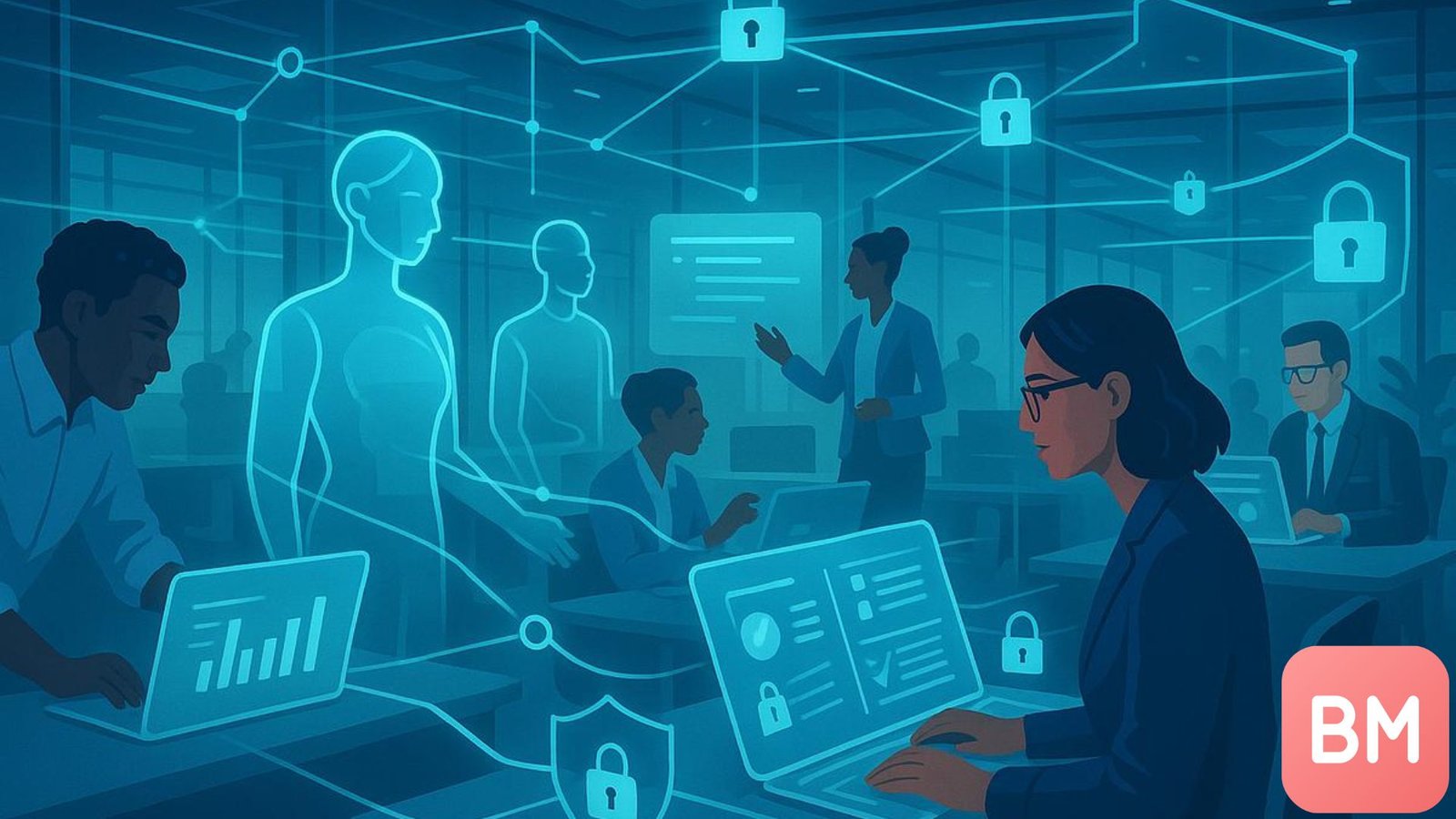
Hrmtaila is an emerging online term connected with artificial intelligence (AI) and human resource management (HRM). Several websites describe it as a modern approach to recruitment, employee records, workplace automation, and workforce planning. Some even present it as a complete HR software platform.
But is Hrmtaila actually a working software product?
There is currently no reliable public evidence confirming Hrmtaila as an established HR software platform or company. Its official website, developer, pricing, and product features have not been independently verified.
The idea associated with the name is easier to understand. Businesses already use AI and digital HR systems to organize employee information, handle routine tasks, and support workplace decisions.
This guide explains what Hrmtaila means, which claims are supported by evidence, how AI-powered HR management works, and what businesses should check before trusting unfamiliar software.
What Is Hrmtaila?
Hrmtaila is an online term mainly associated with AI-powered human resource management. Articles discussing it connect the name with technologies designed to make employee administration more organized and less dependent on manual work.
Human resource management covers the activities businesses use to recruit, support, develop, and manage employees.
These responsibilities include hiring workers, maintaining records, managing leave, arranging training, and handling workplace concerns.
Technology can support many of these activities.
For example, a digital HR system might store employee information in one place. Another tool might help managers schedule interviews or send onboarding reminders.
AI can offer additional capabilities, such as answering questions based on approved company documents or helping employees find relevant information.
However, these are examples of established HR technology. They have not been confirmed as features of a particular Hrmtaila product.
Hrmtaila Quick Facts
| Question | Current information |
| What is Hrmtaila? | An emerging term associated with AI and HR management |
| Is it an official HR platform? | Not independently verified |
| What does HRM mean? | Human Resource Management |
| Who developed Hrmtaila? | Unknown |
| Does it have an official website? | No authenticated product website identified |
| Is there a mobile app? | Not confirmed |
| Is Hrmtaila free? | No verified pricing information |
| What technology is it linked with? | AI, HR automation, and workforce management |
| Is it safe to use? | Product-specific security cannot be assessed without a verified service |
The main point is that Hrmtaila has an online presence as a keyword, but that alone does not establish a working commercial product.
What Does the Name Hrmtaila Mean?
The exact meaning and origin of Hrmtaila have not been confirmed.
The first three letters, HRM, are commonly used as an abbreviation for Human Resource Management.
The remaining letters, taila, do not have a documented meaning connected with a recognized HR technology.
Some online descriptions suggest that the full name represents intelligent or personalized employee management.
That interpretation might sound reasonable, but there is no identified creator who has publicly explained the name.
It is also unclear whether Hrmtaila was originally intended as a product name, an informal technology label, or something else.
This uncertainty matters because an unfamiliar word can acquire several explanations as websites begin discussing it.
A repeated explanation is not necessarily an official definition.
Until original documentation becomes available, Hrmtaila is best understood through the subject most commonly associated with it: AI-assisted human resource management.
Is Hrmtaila a Real Software Platform or Company?
There is not enough trustworthy public information to establish Hrmtaila as a functioning commercial HR platform.
Some websites describe it as cloud-based software with recruitment tools, payroll management, employee dashboards, and automated reporting.
These descriptions are not supported by an authenticated product demonstration or clearly identified software developer.
Several important details remain unknown.
No Verified Developer or Company History
An established software business normally provides identifiable information about the organization responsible for its services.
That may include its legal name, company background, official contact information, and customer support arrangements.
For Hrmtaila, a reliable original source establishing these details has not been identified.
Claims about its founder, headquarters, launch date, or business history should therefore not be accepted without supporting evidence.
No Confirmed Download or Registration Process
There is no authenticated official Hrmtaila download page or registration service to recommend.
Readers should be careful with unfamiliar websites that use the name while requesting personal information, payments, or software installations.
A matching website title does not prove that the site represents an official developer.
No Established Pricing or Technical Specifications
Information about subscription plans, system requirements, supported devices, and integrations is also unconfirmed.
Without authentic product documentation, it would be inaccurate to describe Hrmtaila as free, paid, cloud-based, or compatible with a particular operating system.
This does not prove that a private project with the name cannot exist. It simply means the available evidence does not support treating it as an established product.
Why Do Websites Describe Hrmtaila Differently?
People researching Hrmtaila may notice that different articles give different explanations.
One website may call it a modern HR software platform. Another may describe it as an AI management concept. Others discuss its supposed features as though the product is already available.
This happens partly because information can spread between websites without being supported by original documentation.
A writer may encounter a description on another blog, accept it as accurate, and create a new article using the same assumptions.
Over time, several articles can begin repeating similar claims.
The number of articles does not prove that the claims are correct.
A more useful approach is to look for a primary source, such as an official announcement, technical documentation, identifiable company, or working application.
Bravo Magazine explores a similar issue in its guide to Zvodeps and its unverified online claims, explaining why an unfamiliar technology name should be checked against dependable evidence.
For Hrmtaila, that distinction is especially important because many of the functions associated with the name already exist in unrelated HR software products.

How AI-Powered Human Resource Management Works
Although Hrmtaila itself remains unverified, AI-powered human resource management is a real area of business technology.
Organizations use different combinations of employee databases, automated workflows, analytics tools, and AI systems.
These technologies serve different purposes.
1. Employee Information Is Organized
Most digital HR systems begin by storing authorized employee information in a structured format.
Depending on the business and its legal requirements, this may include employment dates, department assignments, work schedules, leave balances, and training records.
Keeping information organized helps HR teams avoid searching through separate documents every time an employee needs assistance.
Access should be limited to people who have a legitimate reason to use the information.
2. Routine Processes Are Automated
Many everyday HR activities follow predictable steps.
For example, an employee requests annual leave.
The system receives the request, checks the relevant records, and sends it to an authorized manager for approval.
Once the manager responds, the system updates the employee’s leave record and sends a notification.
This process can work through ordinary rule-based automation.
It does not necessarily require artificial intelligence.
3. AI Supports More Complex Information Tasks
AI becomes useful when a task involves processing language, interpreting information, or identifying patterns.
An AI assistant might help an employee locate an approved workplace policy.
Another system might summarize recruitment documents for a hiring manager.
Analytics software may identify patterns in workforce information that deserve further investigation.
However, the accuracy of these outputs depends on the system, its data, and the task being performed.
AI suggestions should not automatically become final decisions.
4. Human Review Remains Part of the Process
Employment decisions affect people’s careers, income, and opportunities.
Important matters such as hiring, promotions, disciplinary procedures, and termination need accountable decision-making.
The UK government’s responsible AI recruitment guidance discusses how organizations can evaluate AI recruitment tools and manage risks involving fairness, transparency, and accessibility.
The general lesson is straightforward: technology can support HR professionals, but responsible organizations still need human judgment.
Main HR Activities Associated With Hrmtaila
Online discussions connect Hrmtaila with several common workplace activities.
The following sections explain how real HR systems can support those activities. They should not be interpreted as verified Hrmtaila product features.

Recruitment and Hiring
Recruitment often involves more than reviewing applications.
Employers must prepare job descriptions, communicate with applicants, arrange interviews, compare qualifications, and coordinate decisions.
Applicant tracking systems help organize this process.
Some AI-enabled applications also offer assistance with document summaries, Employee communication, or matching information against job requirements.
However, automated screening needs careful evaluation.
A system might overlook a suitable applicant because their experience is described differently from the wording used in a job advertisement.
Similarly, relying on historical hiring patterns can create unfair outcomes if those patterns reflect past discrimination.
Employers should evaluate applicants against relevant job requirements and provide appropriate human review.
Employee Onboarding
The first weeks of a new job involve many small but important activities.
Employees may need to complete documentation, understand workplace policies, access company systems, and attend training sessions.
Digital onboarding tools help organize these steps.
For example, a new employee could receive a checklist showing which documents need attention and which training activities remain incomplete.
Meanwhile, HR staff could monitor progress without repeatedly requesting updates.
AI assistants may also help explain approved onboarding information, provided employees can contact a human representative when necessary.
Attendance and Leave Management
Managing employee attendance becomes more complicated as a business grows.
Supervisors may need to coordinate leave requests, shift changes, working hours, and department coverage.
Digital scheduling systems can make these records easier to manage.
Employees may be able to submit requests online while managers review them through a central dashboard.
Automated notifications can also reduce missed approvals.
For businesses with rotating shifts, clear scheduling information can help employees understand when they are expected to work.
These tools must still follow applicable employment rules and contractual obligations.
Payroll Administration
Payroll involves salary calculations, approved deductions, payment records, and other financial responsibilities.
Specialized payroll software can help businesses perform these tasks more consistently.
Many important payroll functions rely on established calculation rules rather than AI.
A system that accurately follows local tax requirements and employment arrangements may be more useful than one that advertises advanced artificial intelligence without explaining its payroll capabilities.
Organizations should verify country support, reporting options, and compliance requirements before selecting any payroll product.
No confirmed information establishes these features for Hrmtaila.
Employee Training and Development
HR teams also help employees develop skills.
Training management systems can record completed courses, organize learning materials, and notify workers about required activities.
AI-powered tools may support learning recommendations or make educational resources easier to find.
For example, an employee who wants to improve spreadsheet skills might receive suggestions from an approved internal learning library.
Such recommendations should support employee development rather than make unsupported judgments about individual ability.
Workforce Analytics
Workforce analytics involves examining employment information to better understand staffing needs.
Businesses may study employee turnover, recruitment progress, training completion, or department workloads.
These reports can help managers identify areas requiring attention.
For example, a company experiencing repeated vacancies in one department might review working conditions, recruitment processes, and management practices.
An analytics tool can highlight a pattern, but it cannot automatically explain the underlying cause.
Managers need to examine the information carefully before deciding how to respond.
Hrmtaila vs. Traditional HR Management Software
The main difference is that traditional HR software is an established technology category, while Hrmtaila has not been confirmed as a particular product.
| Feature | Established HR software | Hrmtaila |
| Product documentation | Available from identifiable providers | Not verified |
| Employee records | Common functionality | No confirmed implementation |
| Recruitment management | Available in many systems | Only described in online articles |
| Payroll functions | Available in specialized products | Unconfirmed |
| AI capabilities | Vary by software provider | No authenticated feature list |
| Customer support | Depends on the vendor | No verified provider |
| Privacy documentation | Can be reviewed for specific products | No authenticated product policy |
| Pricing | Usually available through vendors | Unknown |
Traditional HR platforms are not automatically secure or suitable for every business.
Their advantage is that buyers can evaluate documented features, test the software, and hold an identifiable provider accountable.
AI vs. Automation: An Important Difference
AI and automation are often discussed together, but they are not interchangeable.
Automation performs tasks according to predefined instructions.
For example, a system sends a reminder when an employee has not completed a required form.
Artificial intelligence can handle certain tasks involving language interpretation, pattern recognition, or generated content.
For example, an AI assistant might answer a question about company policy using an approved collection of HR documents.
The distinction matters when comparing software.
A business may only need an automated leave approval system. Adding AI to that process could increase complexity without providing a meaningful benefit.
The better choice is the technology that solves the problem reliably.
Potential Benefits of AI in Human Resource Management
When properly designed and introduced, AI-supported HR systems can offer several practical advantages.
Less Repetitive Administrative Work
HR professionals regularly answer common questions, locate documents, and complete routine updates.
Appropriate automation can reduce some of this repeated effort.
That may give HR teams more time to address employee concerns, coordinate training, and support managers.
The actual time saved depends on the task, existing process, and quality of the implementation.
Easier Access to Information
Employees sometimes need assistance outside standard office hours.
A digital portal can make approved workplace documents and routine services available whenever the system is accessible.
An AI search assistant may help people find the relevant information more quickly.
However, a self-service tool should not become the only way to obtain HR assistance.
More Organized Employee Records
Maintaining information in an appropriately managed central system can reduce confusion caused by outdated files or duplicate records.
It may also make reporting easier for authorized staff.
These benefits depend on correct data entry, suitable access controls, and regular maintenance.
Better Support for Workforce Planning
Reliable workforce reports can help managers identify staffing pressures and prepare for changing business needs.
For example, a company planning to expand its operations may use existing employee information to estimate future recruitment and training requirements.
Such analysis supports planning rather than guaranteeing a particular business outcome.
Risks and Limitations Businesses Should Consider
AI-powered HR technology introduces responsibilities that should not be ignored.
A system may improve efficiency in one area while creating risks in another.
Bias in Automated Hiring
AI systems can produce unfair results when their design, information, or evaluation methods are unsuitable.
For example, a screening tool may disadvantage applicants if it relies on criteria that are not necessary for the job.
The U.S. Department of Justice guidance on AI and disability discrimination explains how automated hiring technology can create barriers for applicants with disabilities.
Organizations should test recruitment tools, provide appropriate adjustments, and ensure that applicants have meaningful ways to raise concerns.
Employee Data Privacy
HR information can contain personal details that require careful protection.
Businesses need to understand why information is collected, who can access it, where it is stored, and when it will be deleted.
The UK’s Information Commissioner’s Office guidance on AI recruitment tools highlights the importance of fair data processing, transparency, and limiting unnecessary information collection.
Privacy should be considered before a system receives real employee records, not after a problem occurs.
Incorrect AI-Generated Information
AI assistants can misunderstand questions or produce inaccurate answers.
For example, an assistant might summarize an outdated workplace policy or overlook an important exception.
Employees need access to current official policies and an HR contact who can resolve uncertain situations.
Important recommendations should be checked before they influence employment decisions.
Unclear Accountability
Problems become harder to resolve when nobody knows who is responsible for an automated decision.
Organizations should establish which employees oversee a system, how errors are reported, and who can correct them.
The CIPD’s guide to responsible AI use by HR professionals explains why people teams should participate in AI governance alongside technical, legal, and other business functions.
Is Hrmtaila Safe and Trustworthy?
There is not enough reliable product information to assess the security or trustworthiness of a specific Hrmtaila platform.
That does not justify labeling the name itself as fraudulent or malicious.
Security assessments require an actual service, identifiable provider, and information about its technology and practices.
If a website claims to offer Hrmtaila, check who operates it before providing employee records or payment details.
Look for an authenticated company identity, relevant legal information, product documentation, and dependable support.
Be especially careful with unexpected download links.
A similar problem arises when unfamiliar software names appear online without an identifiable publisher.
Bravo Magazine’s article on Xuzhanikanoz3.2.5.0 and software verification explains why a product name or version number alone cannot establish legitimacy.
The same reasoning applies to Hrmtaila.
How to Evaluate HR Software Before Choosing It
Businesses interested in digital HR technology can follow a practical evaluation process.
Step 1: Identify the Problem
Begin with the task the organization actually needs to improve.
Is the main concern recruitment, employee scheduling, onboarding, payroll, or administrative communication?
A clear requirement makes it easier to avoid purchasing unnecessary features.
Step 2: Verify the Provider
Look for an identifiable company, product documentation, support arrangements, and clear terms of service.
Check whether the provider can demonstrate its software.
Do not rely entirely on promotional descriptions or testimonials that cannot be independently evaluated.
Step 3: Examine Privacy and Security
Find out what information the software collects and how it is protected.
Review access permissions, data retention policies, authentication options, and procedures for handling incidents.
Businesses should also understand their responsibilities under applicable data protection laws.
Step 4: Request a Demonstration
Ask the provider to show how the product handles a realistic task.
For example, test how a leave request is submitted, approved, and recorded.
A demonstration can reveal whether the workflow is practical for employees and managers.
Use sample data during initial testing.
Step 5: Evaluate AI Claims
If a provider advertises AI-powered recruitment, reporting, or decision support, ask how those capabilities work.
Find out whether the system has been tested for accuracy, fairness, and reliability.
The NIST AI Risk Management Framework provides useful guidance for thinking about trustworthiness and risk throughout the AI system lifecycle.
Step 6: Test Before Expanding
A limited pilot can help organizations identify problems before introducing software across the entire workforce.
Gather feedback from employees who use the system.
Check whether the tool genuinely improves the intended process.
A successful implementation should make work clearer and more manageable, not simply replace one confusing system with another.
A Realistic Example of HR Automation in a Small Business
Consider a fictional company with 40 employees.
Its HR manager currently receives leave requests through email, maintains attendance records in spreadsheets, and answers repeated questions about workplace policies.
As the company grows, these activities become harder to coordinate.
The business decides to introduce a digital employee management system.
First, it creates a secure employee portal where workers can submit leave requests.
Managers receive notifications, review requests, and update attendance records through an approved workflow.
Next, the company organizes its workplace policies in a searchable knowledge library.
Employees can find common information without contacting the HR manager for every routine question.
After testing those improvements, the organization considers an AI assistant that can retrieve answers from approved documents.
The assistant is limited to routine administrative questions. Complicated or sensitive matters are referred to HR personnel.
Throughout the process, the company reviews permissions, employee feedback, accuracy, and data protection requirements.
This is a hypothetical example, not a documented Hrmtaila implementation.
It illustrates how businesses can adopt useful HR technology without assuming that every task requires artificial intelligence.
What Are the Alternatives to Hrmtaila?
Someone searching for Hrmtaila may actually need a dependable system for managing employees.
Instead of focusing on an unverified product name, it is useful to understand the established software categories.
HRIS (Human Resource Information System): Primarily organizes employee information and supports core administrative processes.
HRMS (Human Resource Management System): A broader term for software that may combine employee records with additional HR functions.
Applicant Tracking System (ATS): Helps employers organize job applications and coordinate recruitment activities.
Workforce Management Software: Supports functions such as attendance, shift scheduling, and workforce planning.
Payroll Software: Focuses on compensation processing, payment records, and relevant financial administration.
AI HR Assistants: Use artificial intelligence to support selected tasks, such as locating policy information or handling routine questions.
The features of individual products vary, and some platforms combine several categories.
Businesses should compare documented capabilities rather than assuming every HR system offers the same functions.
The Future of Hrmtaila and AI-Powered HR Technology
The future of Hrmtaila as a specific name remains uncertain.
There is no verified product roadmap, official announcement, or development history that supports predictions about its commercial future.
The broader use of AI in human resources, however, is an active area of technological development.
Organizations are exploring more accessible employee support systems, improved document search, automated administrative processes, and workforce analytics.
Future HR tools may combine these functions more closely.
For example, an employee might use a conversational interface to locate a workplace policy, begin a leave request, and receive an update after a manager approves it.
Such systems would still need reliable information, appropriate permissions, and clear safeguards.
The most important progress will not simply involve adding more AI features.
It will involve making workplace technology genuinely helpful while protecting employees and keeping important decisions accountable.
Frequently Asked Questions About Hrmtaila
1. What is Hrmtaila in simple words?
Hrmtaila is an emerging online term associated with AI-powered human resource management. It is commonly discussed in connection with employee administration, recruitment, automation, and workforce planning. Its official meaning has not been established.
2. Is Hrmtaila a real AI software platform?
There is not enough reliable public evidence to verify Hrmtaila as an established software platform. Descriptions of its supposed features are available online, but authenticated product documentation has not been identified.
3. Who created Hrmtaila?
The creator of Hrmtaila is unknown. No reliable original source has established its founder, developer, or exact origin.
4. Can I download Hrmtaila for free?
No authenticated official download source or pricing information has been established. Avoid downloading software from unfamiliar websites based only on the Hrmtaila name.
5. Is Hrmtaila safe for employee information?
The security of a specific Hrmtaila service cannot currently be verified. Businesses should only share sensitive employee information with providers whose identity, privacy practices, and security arrangements have been properly evaluated.
6. What is the difference between Hrmtaila and HRMS?
HRMS is an established category of software used to support human resource management. Hrmtaila is an emerging online term whose status as a specific software product remains unconfirmed.
7. Can AI replace human resource professionals?
AI can support suitable administrative and information-processing tasks, but it cannot remove the need for accountable human judgment. Sensitive employee concerns and important employment decisions still require responsible human involvement.
Final Thoughts
Hrmtaila is associated with the growing use of artificial intelligence in human resource management, but its identity as a specific commercial product has not been established.
That distinction is important for anyone researching the name or considering software for a business.
The wider technology offers practical possibilities. Digital HR systems can organize records, coordinate routine activities, improve access to information, and support workforce planning.
However, useful technology must also be accurate, secure, fair, and appropriate for the people who depend on it.
Rather than choosing software because of an unfamiliar name or impressive marketing claims, businesses should begin with a genuine workplace need and look for documented solutions.
The most trustworthy HR technology is not necessarily the one promising the most automation. It is the one that solves a real problem, protects employee information, and allows people to remain responsible for important decisions.



One thought on “Hrmtaila Explained: Is This AI HR Software Actually Real?”
Comments are closed.